Thursday, May 29, 2014

An Artful Life


Art isn’t always frame-able or something that can be attached to a wall. We create art by how we live out our days. The whole environment around us is artistic – presented to us and appreciated by us. It’s always speaking to us and we in turn respond.

The significance of ART to our spirits and contributions to our societies can hardly be fully defined or grasped. Art is both an instrument and reward, both cause and effect. But art is also a symbol of things unseen by the naked eye and a metaphor for how we perceive things. Art initiates conversation, opens minds, moves spirits, and yet leaves an air of mystery that lingers. In this regard, art isn’t just ‘art’ but something that stirs the soul and awakens the psyche.

Also exemplifies the importance of our visual world, which is perhaps the biggest mural of all – with details, expressions and stories that are constantly in flux; a performance art of how we live and appreciate our lives. The whole environment is an artistic expression in a way.

We may pay more attention to art we’re consciously creating, but how we exist from day to day is also an art form – not only in the doing, but in what is then created around us. This kind of art isn’t something we make alone; it’s not a private affair but something we co-create with our environment. We’re in a public work of art. When we consciously create it, we get a better sense of who we are.

Observing this world, our lives and our place in both, we are showing that we are cognizant of what’s blooming, morphing and withering before us. This awareness in an art form in itself that again proves art is everywhere and in everything. And we can harness this process of appreciation and creation in all aspects of life. But there is a simple elegance in the initial observation of what’s around us.

When we are aware of even the mundane-seeming things we become more centered, calm and awake. By seeing how everything exists in and of itself and then takes its place – such as animals or rocks or clouds, for instance – we are relating to things visually and getting a sense of space from them. We are ingesting the whole picture – how it is arranged and how it feels to us – rather than simply one artful or questionable detail at a time.

When it comes to art, appreciation doesn’t mean you have to love each piece you see. You just have to consider it. Appreciating life should be like this as well. You don’t have to judge everything you observe or feel; just consider it for what it is and how it might fit in the scheme of things. See how you are not bound to it, and yet how you might affect each other conversely nonetheless.

With Dream Life Designing, for instance, we are tapping into the psychological realm of dealing with the thoughts and emotions behind things. We are putting form to our thoughts and emotions so we can better observe them. “Everything has some kind of form and some kind of landscape, a sense of placement, foundation and order,” Stephen says. “And there’s always a mandala of enlightenment in every landscape.”

“Emotions,” he adds, “are embedded in the environment, not just our brains. The heart and brain are transmitting and receiving what’s around them, but they are not generators; they are co-conspirators with the environment, such as elemental energies like water, wind and fire. We do not control the process, but nor should we become passive receivers only. We are in relationship when we’re interacting with what’s around us.” We might want to occasionally ask ourselves if those relationships are harmonious.

To know who you are, what you’re thinking and feeling – while profound insights can be gleaned from psychological exercises – full awareness cannot merely be found in the head. We have to go out into the world to discover who we are in relation to other forms of existence. Because we do not thrive being contained creatures, nor are we totally separate from what’s “out there”. There is a balance to achieving harmony in our days, and this is the fine “Art” of Living.



Monday, April 21, 2014

Middle Way Gallery Opening Art Show


Middle Way Health opened the Middle Way Gallery on April 12, 2014!

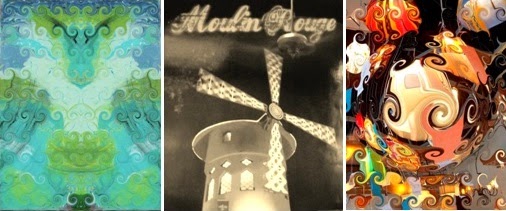
Dream Life Designing's Melanie Noel Light exhibited her photographic and mixed media art at the 2nd Saturday Art Walk. The show - The Art of Expression - runs through May.


Tuesday, December 17, 2013

Trauma, Pt. III ~ Mastering It


In the last two articles on trauma we talked about how wrenching experiences affect us all, in big ways and small, and how not dealing with them impacts present and future mental health as much as past emotional wellbeing. But we’ve only covered trauma in general terms. To really understand how trauma affects you personally, it’s important to be familiar with the actual process, from event to reaction, response, and long-term effects.

Depending on your level of sensitivity, past traumas, and openness to dealing with the resulting shock and grief, what actually triggers the trauma response varies from person to person. The death of a loved one, near-death experience or severe accident for instance, are likely to be intensely trying for just about anyone. But for many of us, even more insignificant-seeming incidents can compromise us emotionally. And because those cuts and bruises can’t actually be seen, they usually aren’t properly cared for.

The stages of trauma, grieving or bereavement are: Flight, Fight, Freeze, Forget, and Fabrication.

In FLIGHT, we attempt to bypass or escape from the assaulting event.
In FIGHT, we stay and wrestle with the problem or antagonist.
With FREEZE, we remain still, hoping the trouble will pass us by or that we won’t be seen.
With FORGET, we try to disassociate and not remember, or repress it in order to not become attached to the event.
And with FABRICATION, we reframe the event or our part in it by telling a story about it.

If we are “successful” in any of these stages – fleeing from the trauma without major injury, winning the fight, avoiding trouble, gaining a healthy distance from it, or creating a higher story or self, we avoid becoming traumatized, and thus return to a healthier state of functioning. As well, we don’t have to go through all the stages for the best outcome. Often, finding some healthy resolution within one of the stages is enough for us to not get “stuck” in the trauma. Getting stuck means the pattern repeats without a positive resolution, making thriving an ever-elusive entity.

While we call them the five stages of trauma, they can happen when we’re simply overwhelmed. And this is what so many of us miss. If past traumas aren’t worked through constructively, “lesser” situations can trigger the 5-Fs response. And with today’s hectic, overwhelming lifestyles, there seem to be a lot more landmines out there. So if you continue to feel like you have to flee, fight, freeze, forget or fabricate through something in life, then you’re likely stuck in one or more stages of the trauma-response process.

For instance, it’s common for people to become stuck in the last stage, telling a false story about not just the event, but who they are. They may blame themselves for the occurrence happening in the first place and/or shape their identity around it, believing that they are inferior or unworthy. But there’s real freedom in allowing the process and getting through it constructively, thereby integrating the experience into your life as part of your growth.

There’s a common misperception, however, that we have to “let go” of hurtful experiences. But we can’t really rid of them in the sense that we have full control. There’s no magic process, spell or pill that will extract them altogether from the sum of our life experiences. And if they do go away, it’s more likely that they somehow and mysteriously let us go.

Not becoming stuck requires “digesting” the painful experience as an active process of integration. Meaning, it’s a part of you but it doesn’t define you, nor does it control your future responses and reactions. In attempting to learn from it, to gain wisdom and greater compassion for yourself and others, the trauma then doesn’t become an obstruction to your emotions or healthy engagement with life.

Letting the impressionable experience and your reaction to it move through you – while observing, learning, and exercising self-care – is a healthy, constructive way to deal with what threatens your peace of mind. And the more you learn to do this, the easier and faster it becomes, as you hone the craft of dealing with life’s turbulences.

Wednesday, December 4, 2013

Trauma II: Spring Cleaning


Traumas happen to all of us throughout our lives, from so small that we hardly notice them to so large that they affect our every interaction with the world around us. And there’s a lot in between as well. But how many of us are actually aware of how the trauma response operates and where we are emotionally in the process?

Traumas can be physical, as in injury to the body, but there is also always an accompanying mental component. Most traumas, however, are strictly emotional, which makes them even harder to detect and heal. While none of us is immune to trauma, the question is how – and if – we deal with it. Learning to identify traumatic experiences and understanding how the internal process works is one giant step in the direction of self-healing and empowerment.

When any kind of experience occurs that triggers a traumatic response, the initial - almost instantaneous - reaction may be one of non-judgment. Like witnessing a violent or disturbing scene in slow motion, a part of you knows it’s not going to have a good outcome, but you haven’t yet formed a solid judgment around it or experienced the full flood of resulting emotions.
This means the trauma reaction has not yet kicked in. And for some, it never does kick in (a form of denial). For most people, however, they never get past one of the stages of trauma.

Basically, the trauma response is being impressioned by something that happens and imprisoned by the fight or flight. Our only options are remaining stuck in one or multiple stages… or getting through the process, out of its shackles, and on with our life.
A common reaction to the trauma response is armoring up. But this won’t help us get around the trauma because the trauma will always find a way in. It’s already in, in fact, attached at the core, and this is why it can have such a powerful hold on us if not dealt with.

Getting to the healthy wisdom place amidst trauma involves seeing the big picture, including how it all unfolds inside you – the traumatized part as well as the untraumatized part – and how the balance forms between them. Meaning, what is it inside you that can see both the pain and the logic at the same time? Getting to the place where you can feel the pain or grief while saying it’s ok is a healthy form of acceptance and letting go. The wisdom mind can re-create a place of nonjudgmental awareness and stabilize/embody it anytime.

Trauma is especially common in caregivers, rescuers and the like. But it’s not just the traumatic experiences that cause problems; it’s also our reactions to them. For instance, feeling overwhelmed, trapped, helpless, or like you really screwed up can cause PTSD (which truly is a trauma prison). You may be angry with yourself or someone else, and this is trapping you further, being obsessed with trying to change it or ruminating over it. Some people even let the trauma become their defining identity.

The only way back to a balanced state is getting out of the vicious cycle (which becomes the trauma story you live within). When you can talk about one of life’s battle scars while allowing the feelings to come through and express themselves - without being sucked back into the drama - this is healing. Getting back to positive emotions can break you of the negative cycle because they are constructive and you can use them to better your life rather than break it down.

The good news is that actively working through trauma and adding a spiritual element can lead to a real deep resolution! But… most people aren’t going to go there. Why? Fear and denial. Fear of the intensity of the feelings, fear that the pain will never end, and fear of loss of control. As for denial, it’s a powerful self “protective” mechanism that actually does quite the opposite: It doesn’t allow us to heal, to fully engage in our lives, or reach our potential as human beings.

Hey, we’ve all experienced overwhelming, upsetting or traumatic events. But some of them just might be prohibiting us from accessing all the wisdoms, joys and triumphs in life. The best way to rid of monsters (real or symbolic) is to face them and shed a light on the fears they bring up. The best way to free up sacred healing space is to clean out a closet once in a while, and maybe donate the old bones to science. The stories we live with then can at least be honest, and maybe even helpful for others.
Trauma can be accessed and worked through via talk therapy, writing therapy, hypnotherapy, shamanic healing, or meditation and mindfulness, all of which are offered at Middle Way Health. Want to know more? Watch for part 3 where we’ll get into just what the five stages of trauma are.


Tuesday, November 26, 2013

Trauma: Bringing it to Light


TRAUMA
Traumas are common, possibly as common as sneezes. The problem is that we can’t see them, nor do we have a magic phrase that heals them. Perhaps it is their mysterious nature that makes us so uncomfortable with them. Obviously, their ability to cut so deep, imbed, infiltrate and immobilize adds to our cultural attempts to keep trauma underground.

There are little traumas and there are really big traumas. The big ones can seem so overwhelming that we try everything to deny them. The little ones most often go unnoticed, but can add up overtime and unconsciously affect the present quality of our lives.

I used to think I hadn’t experienced much trauma in my life because there was nothing ‘really big’ shadowing part of my past. But the more I began to learn about the nature of trauma and what makes something traumatic, the more I realized I had plenty. Some were obvious, like the deaths of grandparents and friends, but so many others had gone under the radar for so long (like pets disappearing, mean childhood pranks, the condescension of others, etc.)… And I realized that by not acknowledging them, I was denying a part of my own innocence and delaying part of my own growth.

We’ve all had traumatic experiences, and we’re all affected differently by them. What may be traumatic to one person might roll off another’s back. We can’t judge another’s emotion, pain or turmoil, but we can learn to face and manage our own. All feelings are valid and yet they should be explored so we do not become slave to them. We all have wounded parts. Those wounds should be tended to without over or under-exaggeration to let the healing begin.

Our own personal healing may be exactly what the world needs now.


Friday, September 13, 2013

Writing a Book, pt. III – Re-creating Our Stories & Creatively Journeying Through Life


The ‘Something So Obvious’ Healing Journey Workshop

Something So Obvious is about how people heal, how they become enlightened, and what they do with that awareness. It’s a lifelong process that we can learn to accept and improve upon as we go. We’re all on a journey of self-discovery as we discover the world around us, and that includes experiencing setbacks and uncovering vulnerabilities. So we must as well heal as we go or else our growth will be limited and true satisfaction fleeting. Seeing our lives as a journey of healing, growth and joy – while overcoming occasional blockages and traumas – is different from pursuing happiness and stopping reluctantly to deal with one crisis after another. Incorporating the challenges into the journey, they become inspirations and catalysts for self and life improvement.

In putting this book together – characters, experiences and growth opportunities - we’re also creating a program for journey work at Middle Way Health. The Something So Obvious storyline mirrors anyone’s story. It represents our struggles and growth. It even exemplifies how we at Middle Way Health lead people through their own healing and growth. Because the only way to talk about and envision the whole journey is via a relatable story or biography which people can identify with. Then we go from healing (feeling safe, comfortable and empathized with) to learning healthier living (a new way of being). We’re not just solving problems but moving beyond them by visualizing and practicing new ways of experiencing life. As well, we re-write our own stories as we choose.

Why is the story so important - becoming aware of our personal stories, or what Stephen sometimes calls our ‘inner screenplay’? It’s important because we will usually stick to our previously-written script whether it’s working for us or not, whether we’re aware of doing this or not. Becoming conscious about the story we’re telling ourselves - the novel where in, the big screen we see ourselves on - allows us to question who really wrote the story, what it’s based on, if it fits us, and whether we believe we can change it.

The kind of “story” we’re talking about involves the assumptions, beliefs and unconscious patterns we developed long ago, the basic building blocks that frame our current actions, reactions and emotions. We get tricked into thinking that if we just keep doing the same thing over and over again, a new outcome will eventually occur. As well, we’ve become so accustomed to our dysfunctional patterns that we choose the broken record over the effort it will take to make a new one.

And yet, sometimes it’s not enough to just write down our story and then reframe it in a positive light. We have to dig deeper and then evaluate who, what and where we actually want to be. Stories stick with us because we haven’t checked them for accuracy or validity. It’s hard to make change at that level because we’re not trained on how to go about doing it. That’s why we need others to help us, a healing team to access the story from different angles. We need help getting out of the crash-and-burn-and-heal habit, and into an engaging, authentic pattern of deep healing and self-actualization.

But uncovering the old story and writing a new story is still not enough. If we lived only in the ethereal dreamland of our new story – not actually acting it out in real life – we’d just be swapping a fairytale for a fantasy. Trying out our new story, and editing and improving it as we go, takes us from just surviving to actually thriving. This is what we call ‘La Dolce Vita’, or the sweet life.


Thursday, September 5, 2013

Writing a Book, pt. II – The Philosophical Side of a Creative Project’s Journey


Recently on the Heart & Soul blog we talked about embarking on a long-term project and how it stacks up in the scheme of our lives. While there’s a thrill from the potential of the project and a motivation to keep going, there is at times also a wistful aura around it when interruptions force a temporary separation.

But interruptions aren’t actually separate from our creative life’s journey; they are part of the journey. Like being on a road trip and having to pull over to change a tire… It is simply a detour to a new and unexpected experience. And it should be savored (or at least accepted) rather than viewed as something that’s not supposed to be happening.

So then what exactly does a creative project mean as it relates to our lives? Because there’s always some connection and some grander meaning to our creative endeavors. Using our imaginations to think differently, we are connecting with a deeper part of ourselves and bringing it out into the world. Therefore, any creative or novel activity not only brings about a new facet of reality, it also reflects our private inner journeys.

A book, for example, is always somewhat autobiographical, being part of the writer’s own story. And as the story and characters evolve, so do those of us involved. A certain partnership develops not only between those working together on the same project, but between project and creator. And as these relationships strengthen, so does the potential for our lives. For example, the vision for our fiction novel Something So Obvious has expanded along with that of our practice at Middle Way Health. The project itself has become part of our inner vision, part of our personal growth, and part of our professional growth.

Collaborating with others on a long-term project requires a mutual respect and admiration. This then evokes an equality that allows us to inspire one other, be open to new ideas, brainstorm out of blocks, and keep each other on track. We stay grounded by creating a healthy sense of place, which we accomplish by meeting at the office once a week, catching up on personal stuff, and then delving into the deliciousness of letting our minds wander freely.

But it is nonetheless a process, and process implies movement. It’s almost as if we’re all on a pilgrimage together, like we’re traveling in a moving train across landscapes that continually change and yet sometimes repeat without ever being exactly the same. Our lives go on just as the train traverses boundless territory. Meanwhile, we are part of the landscape - not mere observers - affecting it as well as we go. The conversations change as we get older and grow, incorporating our newness into the story and the story’s excitement into our own lives. The settings and characters constantly evolve, just like real life.

And yet, there’s also an odd ‘Alice in Wonderland’-like quality to the journey that can cause us to wonder at times whether we’re really going anywhere or if it’s the landscape that’s actually the thing moving around us. So we pause and ingest the big picture - newness and all – and realize that our project remains a tangible thing, building a framework to which we can take hold and a structure for the relationship that enables a genuine richness to flourish.

Any relationship is unique in itself, but it takes on another dimension when we have a common goal and work through it together. Like traveling companions, our conversations and habits change when embarking on this kind of a journey. There is a familiarity that allows us to share what feels necessary or right, and a focus that then pushes us to get down to the work at hand; Work that takes effort and persistence in bridging inner and outer worlds, but includes plenty of play in the rich realms of imagination.

Creating something, imagining something to life, and working with others on its manifestation can be a dizzying process. It may be moving fast when we want to slow down or it can seem at a standstill when we’d really like to be cruising at a comfortable pace. But here’s where the lesson of the journey is: We’re not in total control of the wheel, the winds, visibility, or other variable factors. They too are our silent partners, whether supporting us, guiding us, inspiring us, or providing necessary detours along the way.